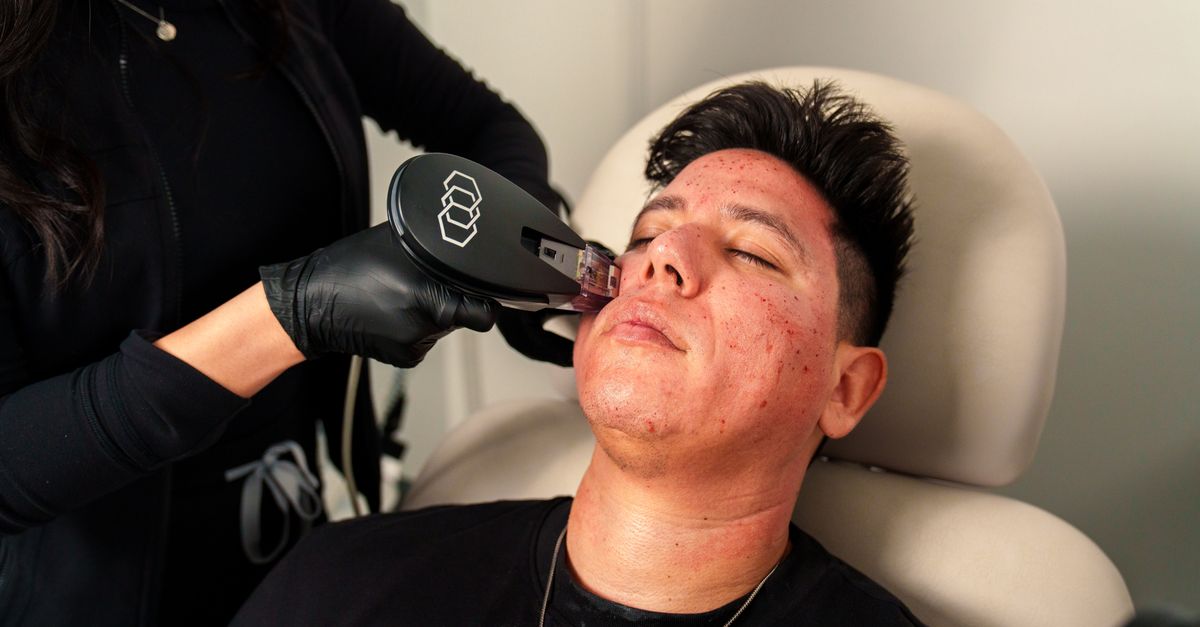
While AI assistants can recognize images, they rely on structured text to understand the context and verify the results shown in your before-and-after photos. To gain visibility in AI-driven search, you must describe these visual results in structured text that these systems can understand and cite.
Your gallery is where potential clients see definitive proof of your work. It builds trust and drives consultations. However, without textual context, AI systems may struggle to interpret the specific procedures and outcomes in that gallery. They use both image analysis and text to build understanding.
Without a textual description of what's in your photos, an AI has no verifiable evidence of your expertise. It cannot confidently recommend your med spa for a specific procedure if the proof of that procedure is purely visual.
Why AI Can't 'See' a Great Result (And What It Reads Instead)
Large text-based AI systems do not experience your website like a human user. They don't see your layout, colors, or images. Instead, they process the underlying code and text content of the page.
When an AI analyzes your site, it looks for explicit, factual statements. It reads headings, paragraphs, and data embedded in the page's code. An image file named 'photo1.jpg' provides no useful information, but a sentence describing the result does.
This process is central to how an AI determines expertise and decides which businesses to recommend. Improving your AI Visibility means ensuring your most compelling proof—your results—is available in a format these systems can read and process.
The Three-Layer Fix: Turning Images into Verifiable Facts
The solution is to manually translate your visual evidence into clear, structured text. This involves adding three layers of information to every before-and-after photo on your website. Each layer provides context that an AI can understand as a verifiable fact.
These layers work together to build a complete picture for the AI. They transform an anonymous image into a documented case study, connecting the visual change to the specific procedure, the service you offer, and your business's location.
The three layers are the image's 'alt text', its visible 'caption', and the page's 'schema markup'. Each serves a distinct purpose in making your visual proof readable and citable for AI assistants.
Layer 1: The 'Alt Text' Is Not Just for SEO Anymore
Alternative text, or 'alt text', is an HTML attribute on an image tag. It was created for accessibility, describing an image to screen readers. Today, it is also a primary source of information for AI crawlers.
Most med spas use generic alt text that is not helpful. To make it useful, describe the image with clinical precision. State the procedure and the specific, visible outcome.
Here is a direct example of how to improve it. Instead of writing `alt="before and after"`, write `alt="Before and after of non-surgical rhinoplasty. The post-procedure image shows a straightened nasal bridge and a refined, lifted tip."` This provides concrete facts.
Layer 2: The 'Caption' That Connects the 'What' to the 'Who'
The caption is the text displayed directly beneath your image. While alt text describes the visual change, the caption connects that change to the service you provided. It answers the client's next questions: what was done, and can I get it here?
A good caption grounds the result in reality. It names the service, mentions the technology or method used if relevant, and confirms the result is from your practice. This turns a picture into a testimonial for a specific offering.
For the same non-surgical nose job photo, a strong caption would be: `"Result of a non-surgical rhinoplasty performed at our Houston, TX clinic. This procedure uses dermal fillers to reshape the nose without surgery."` It confirms the service and location.
Layer 3: The 'Schema Markup' That Makes It Official Knowledge
Schema markup is a type of code added to your website that is not visible to users but is read by search engines and AI. It structures your page's data into a format they can easily understand, like a universal translator for facts.
Using `MedicalProcedure` schema, you can formally declare the procedure shown, its purpose, and link it to your business as the provider. This is the most powerful layer for establishing authority, as it presents your claims in a standardized, machine-readable format.
By structuring the data, you are not just describing a photo; you are making a verifiable claim that your business performs this procedure with these results. This is the kind of structured data that AI systems often use to formulate answers and recommendations. Our own med spas services focus heavily on getting this layer right.
Implementing all three layers for your photo gallery takes effort, but it directly addresses how AI systems gather information. It turns your best visual proof from a blind spot into a core asset for AI visibility. Systems that do this systematically, like our AI Visibility Fix Sprint, can help ensure this work gets done correctly.
See where your business stands — free, in thirty seconds
The automated site check audits your machine readability and emails you the results. No sales call required to get the report.
Run the free AI visibility check